THE FUTURE ISN’T COMING. IT’S ALREADY HERE.
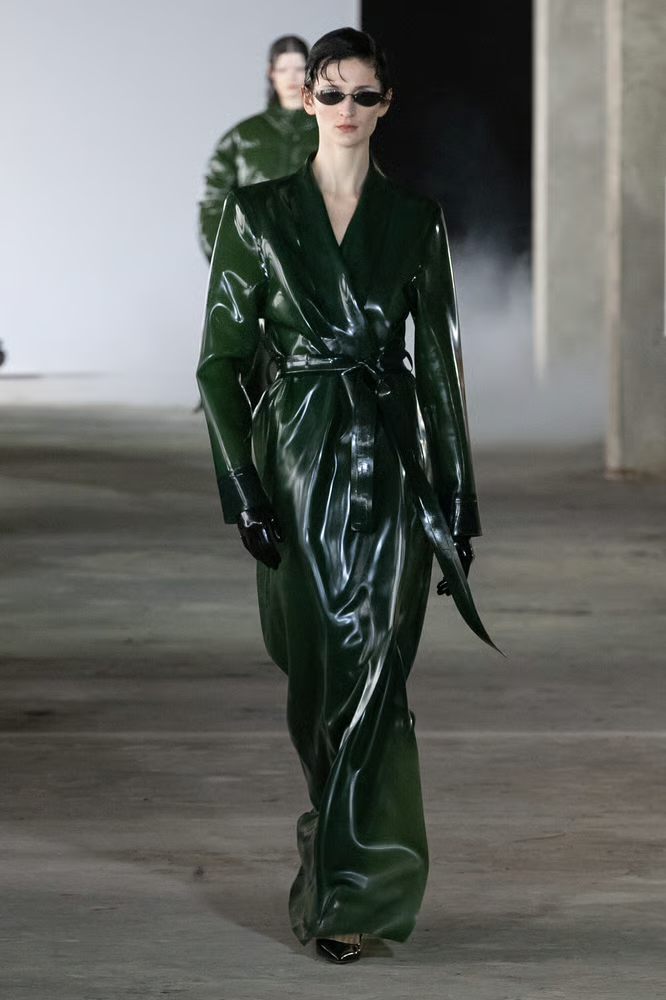
For decades, latex has been treated as fashion’s outsider: provocative, theatrical and confined to spectacle. Yet contemporary designers are quietly dismantling that assumption.
Today’s latex is no longer designed simply to attract attention; it is engineered to question what clothing can become.
Across Paris, London and Milan, latex has entered conversations once dominated by leather, silk and tailoring. It is becoming architectural, sustainable, technical and increasingly intelligent. Rather than representing fantasy, latex now represents possibility.
The future of latex is not louder. It is more sophisticated.
“DESIGNING A NEW SILHOUETTE”
Traditional tailoring begins with fabric.
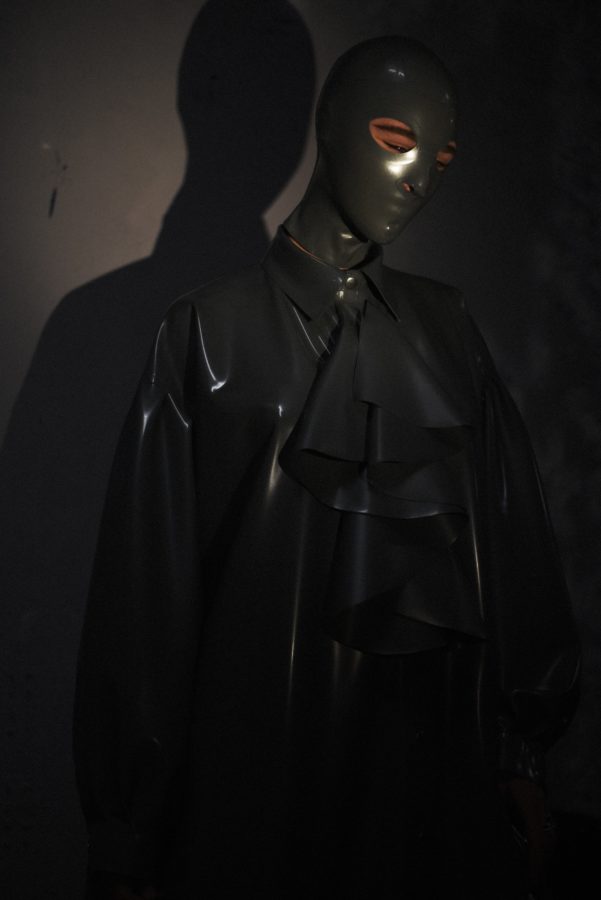
Future latex begins with structure.
Designers such as Avellano reject the idea that latex should simply cling to the body. Instead, garments create new silhouettes through volume, tension and sculptural precision. Coats behave like liquid armour. Dresses resemble engineered shells. Every seam becomes part of an architectural language.
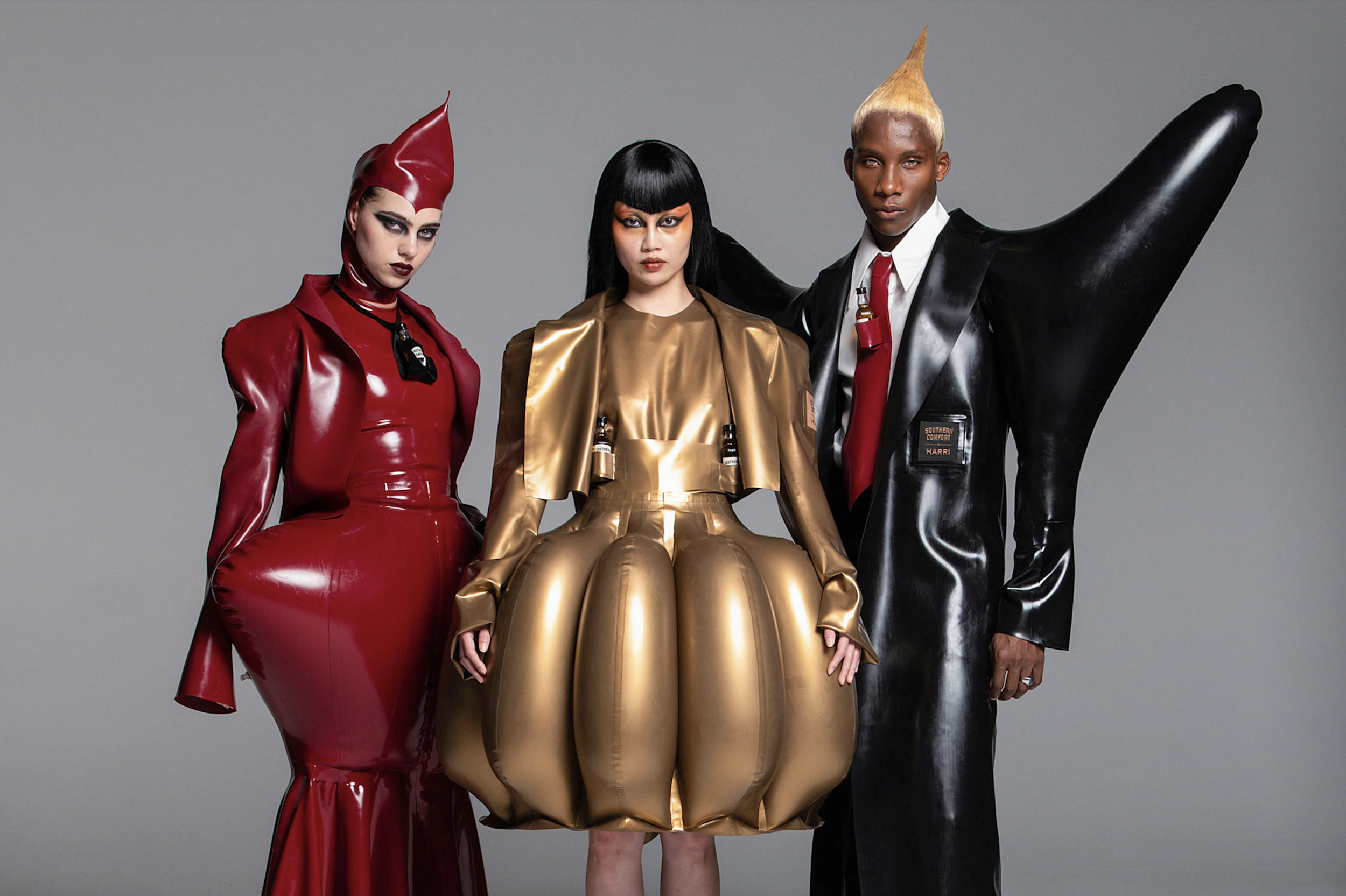
Meanwhile, Harri expands the conversation further. Inflated forms distort the human outline until clothing becomes sculpture. The body is no longer hidden or revealed; it is redesigned.
Latex is no longer following fashion.
It is redesigning it.
“WHEN MATERIAL BECOMES TECHNOLOGY”

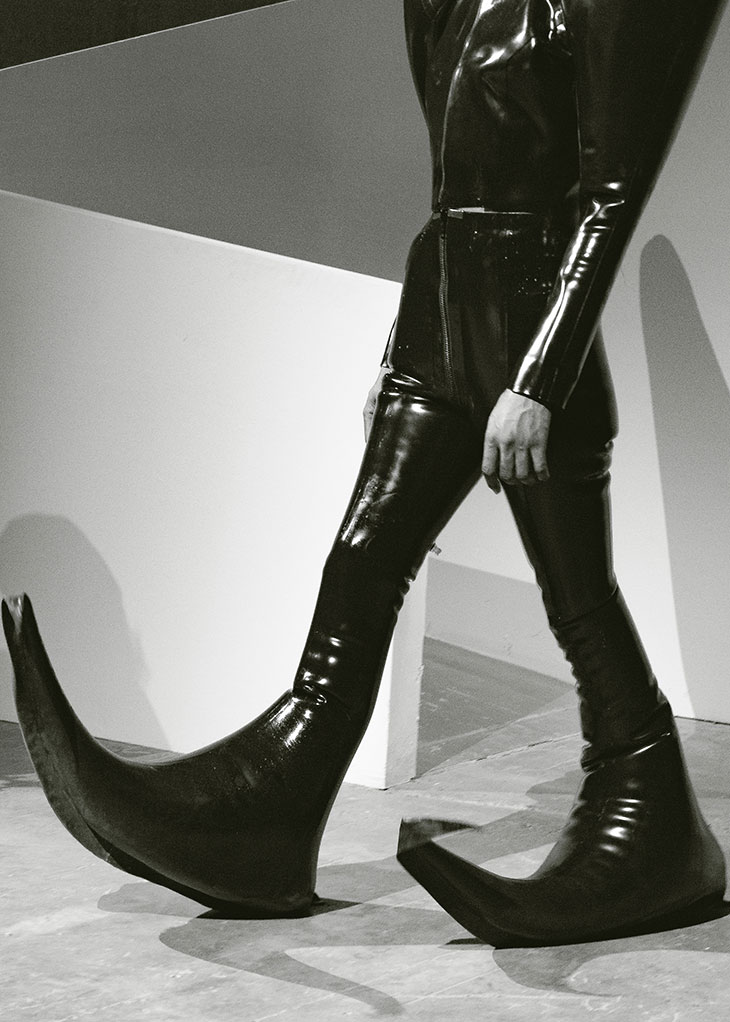
The next evolution of latex lies beyond aesthetics.
Future designers increasingly approach latex as a performance material rather than a fetish material. Its elasticity, reflection and precision allow garments to respond differently to movement, light and space.
Every reflection changes the appearance of the garment.
Every fold alters perception.
The wearer becomes an active participant rather than a passive observer.
In this future, clothing behaves almost like technology; Responsive, adaptive and constantly changing through interaction.
“THE ARCHITECTS OF TOMORROW”
HARRI.
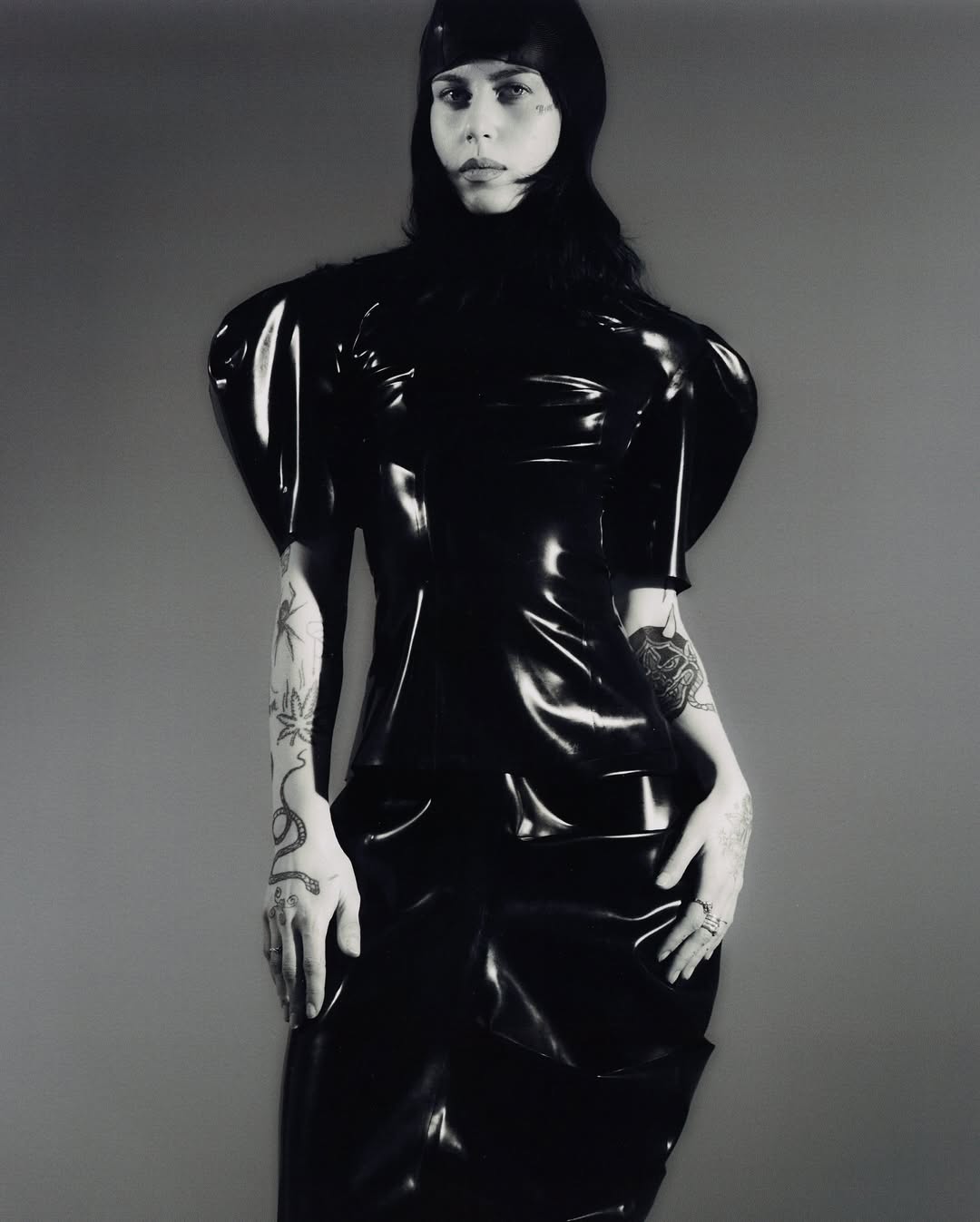
Harri rejects the idea that clothing should simply dress the body. Instead, his latex creations reshape human proportion through inflatable structures, exaggerated silhouettes and sculptural experimentation. The result is neither costume nor conventional fashion, but wearable architecture.
Rather than using latex to celebrate the natural form, Harri uses it to question it. Limbs appear enlarged, shoulders become monumental and familiar silhouettes dissolve into abstract sculpture. Each garment asks where fashion ends and contemporary art begins.
In doing so, Harri represents one of the boldest visions for latex’s future: not as a second skin, but as an entirely new body.
AVALLANO.
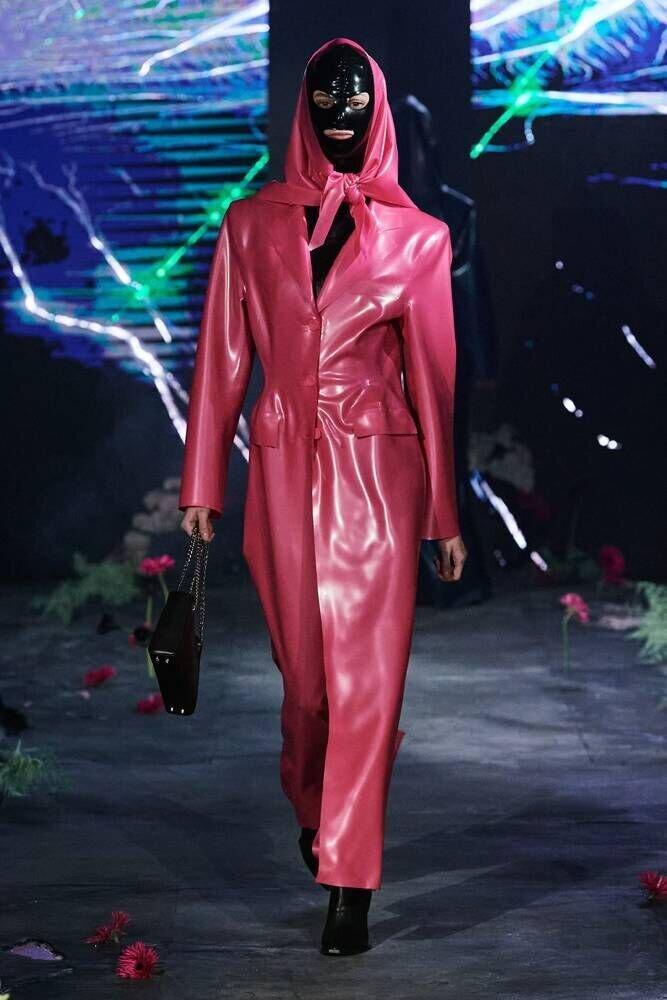
Avellano has quietly transformed the perception of latex within luxury fashion. Through refined tailoring, minimalist silhouettes and exceptional craftsmanship, the Paris-based label demonstrates that latex can possess the same elegance traditionally associated with leather, wool or silk.
Gone are the exaggerated stereotypes often attached to the material. Instead, Avellano presents sculptural coats, fluid dresses and sophisticated outerwear that place construction above provocation. Every garment reflects precision, restraint and confidence.
The future imagined by Avellano is one in which latex no longer occupies the margins of fashion. It becomes part of luxury’s everyday vocabulary.
lady lucie.

Lady Lucie represents the quieter evolution of latex. Rather than pursuing spectacle, the brand celebrates craftsmanship, intimacy and bespoke design. Each garment reflects hours of hand construction, careful finishing and a deep understanding of the material’s unique behaviour.
The emphasis lies not on shock value but on quality. Through refined silhouettes and luxurious detailing, Lady Lucie demonstrates that latex can communicate sophistication without sacrificing its distinctive visual identity.
It is a reminder that the future of latex will be shaped not only by innovation, but by artisans committed to mastering the craft itself.
WILLIAM WILDE.
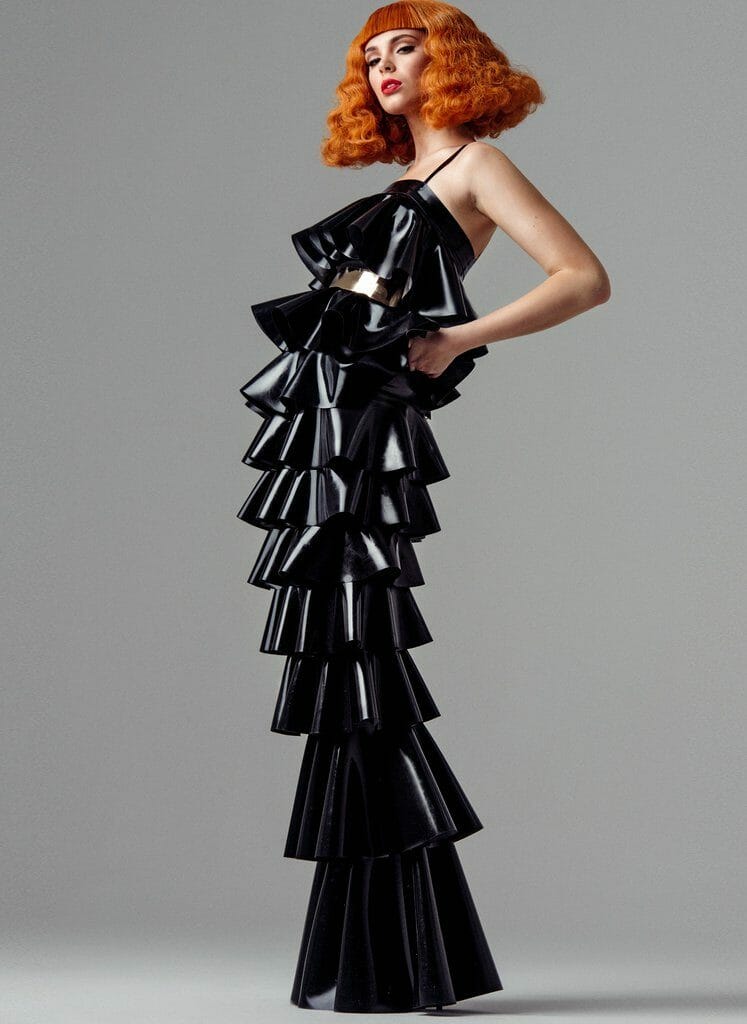
William Wilde occupies a distinctive space between haute couture and theatrical performance. His work embraces dramatic silhouettes, intricate detailing and uncompromising craftsmanship, proving that latex can be both rebellious and exceptionally refined. Rather than softening the material, Wilde amplifies its visual power. Structured corsetry, sculptural gowns and meticulously constructed garments demonstrate how latex can command attention while maintaining couture-level precision.
In William Wilde’s hands, latex becomes more than a fabric. It becomes a statement of confidence, individuality and artistic ambition.
BEYOND THE DESIGNERS.
Collectively, these designers reveal a significant shift in the evolution of latex. No longer confined to celebrity wardrobes or underground subcultures, the material is increasingly explored through architecture, craftsmanship, sustainability and technological innovation. Although each designer approaches latex differently, they share a common belief: its future lies not in repetition, but in reinvention. This new generation is not simply designing garments. They are redefining the possibilities of one of fashion’s most misunderstood materials.