Rated R – When Latex Became Control
“I stand up for what I believe in, and a lot of the time that can be against people’s opinions.”
– Rihanna
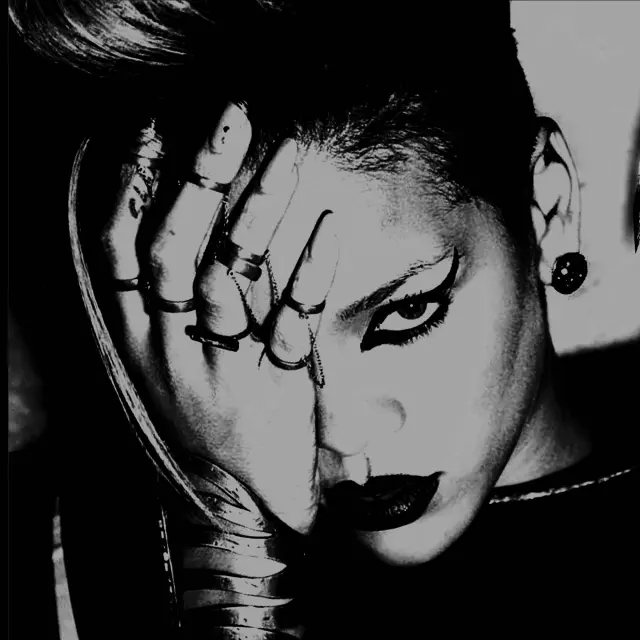
After Prince expanded identity, Rihanna tightened it.
Rated R marked a rupture in her public image. The brightness dimmed. The softness receded. Latex in this era was not playful, not theatrical: it was controlled. Structured silhouettes, harnesses, sharp shoulders, dark gloss. The body was not offered; it was contained.
Latex became control because vulnerability had already been exposed.
This was not spectacle.
This was boundary.
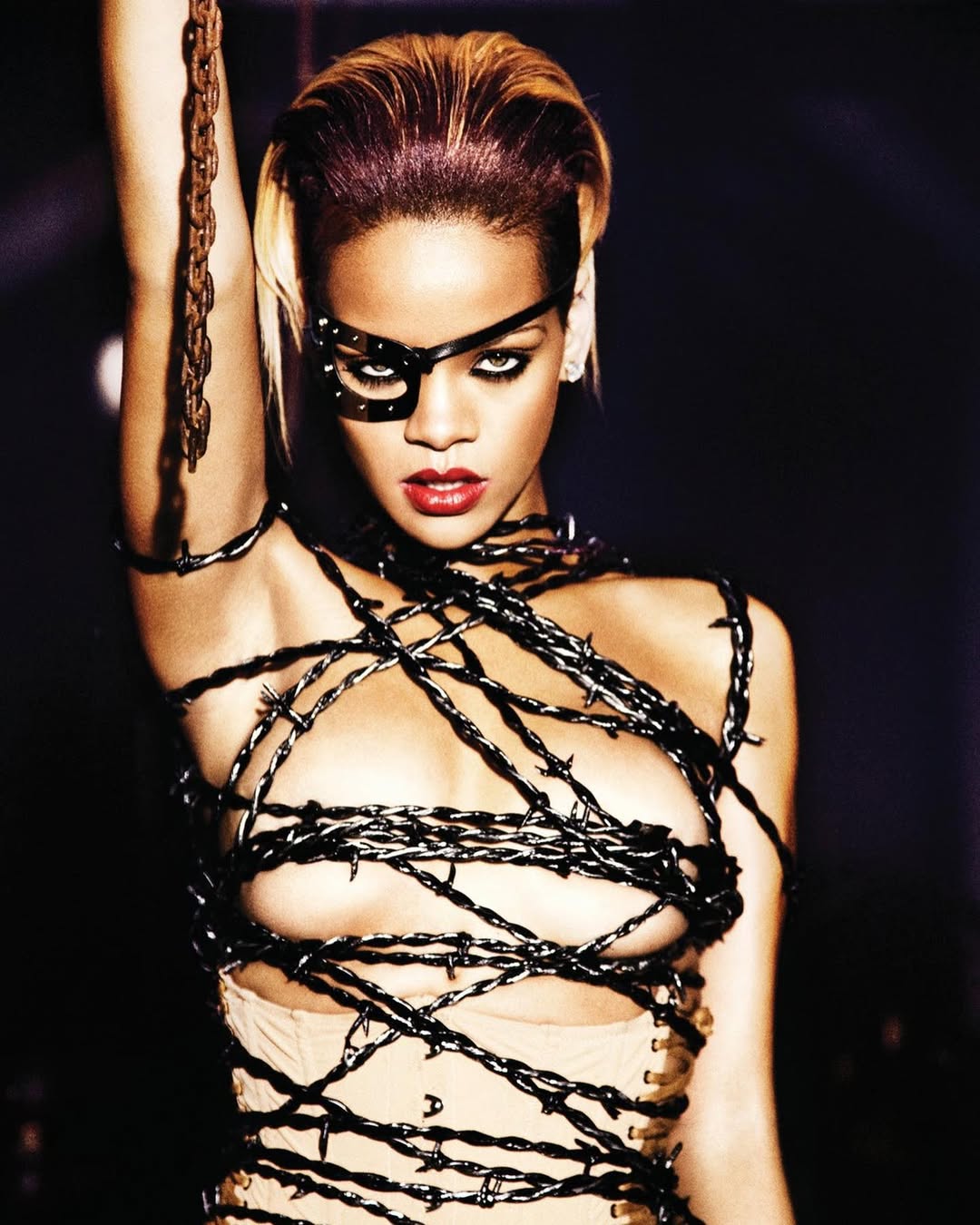
The visual language of Rated R leaned into severity. Straps crossed the torso like deliberate lines of defence. Gloss caught light without inviting it. The styling was minimal, almost militant. Rihanna moved less fluidly in this era. Her posture hardened. Her expressions sharpened.
Latex here did not exaggerate sensuality.
It disciplined it.
Where earlier pop eras framed the body as desire, Rated R framed it as ownership.
Control became aesthetic.
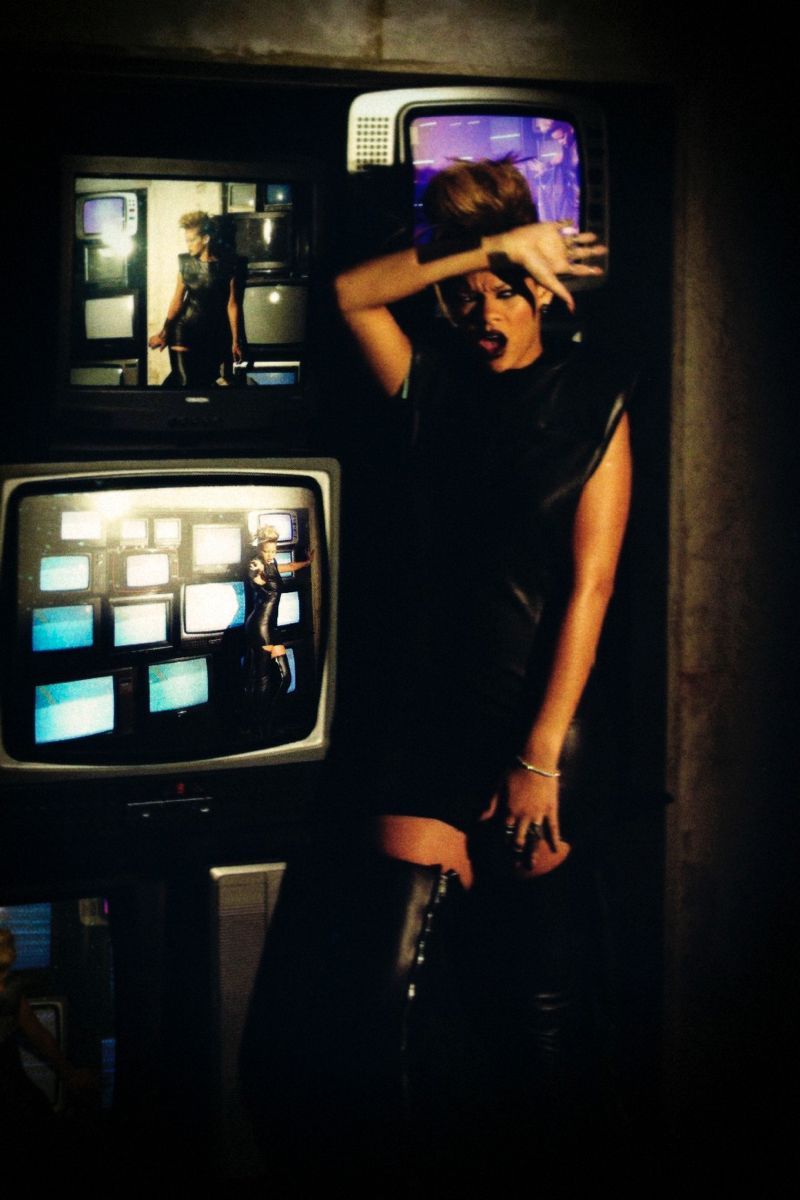
There is restraint in the imagery. Screens flicker behind her. She sits, not performing for gaze, but directing it. The power dynamic shifts subtly. The body is present, but the gaze is not pleading. It is assessing.
Rated R did not romanticise pain. It restructured it.
The latex became metaphorical, a second skin that signalled autonomy. Not because it was protective, but because it was chosen.
Choice is control.
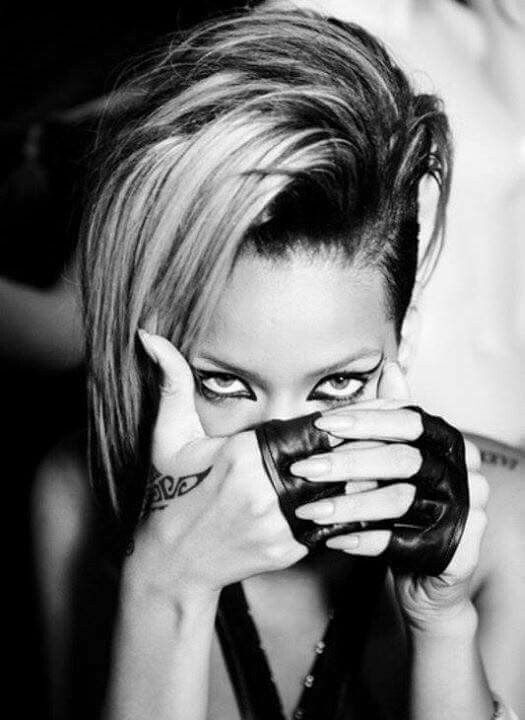
Keep it minimal.
Rihanna’s Rated R era did not dissolve identity or provoke scandal.
It recalibrated power.
Latex became control because she refused to let narrative define her body before she did.
The gloss remained.
But the softness did not.