Renaissance Era – “When Latex Became The Spectacle”
“I feel powerful when I feel free to express myself.”
– Beyoncé
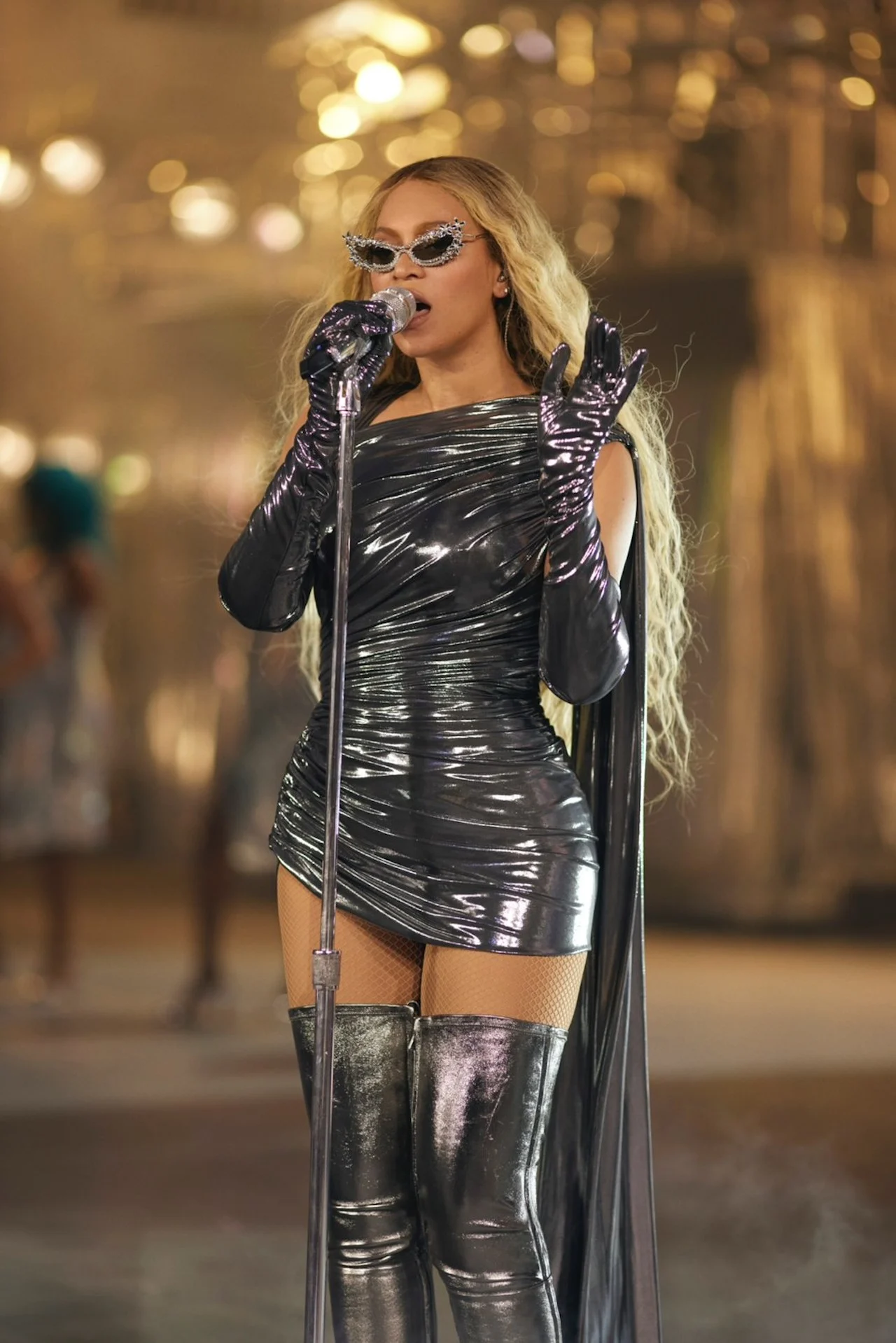
By the time the Renaissance era arrived, the visual language of pop had fully absorbed the aesthetics of nightlife, fashion and performance culture. Latex no longer appeared simply as fetishwear or futuristic costume. It had become something larger – spectacle.
With Beyoncé, latex entered its most theatrical phase. Across the Renaissance era. From promotional imagery to the monumental Renaissance World Tour: glossy bodysuits, metallic finishes and sculptural silhouettes transformed the performer’s body into a living stage object.
The material no longer suggested secrecy or underground culture. It commanded attention.
Latex had become performance.
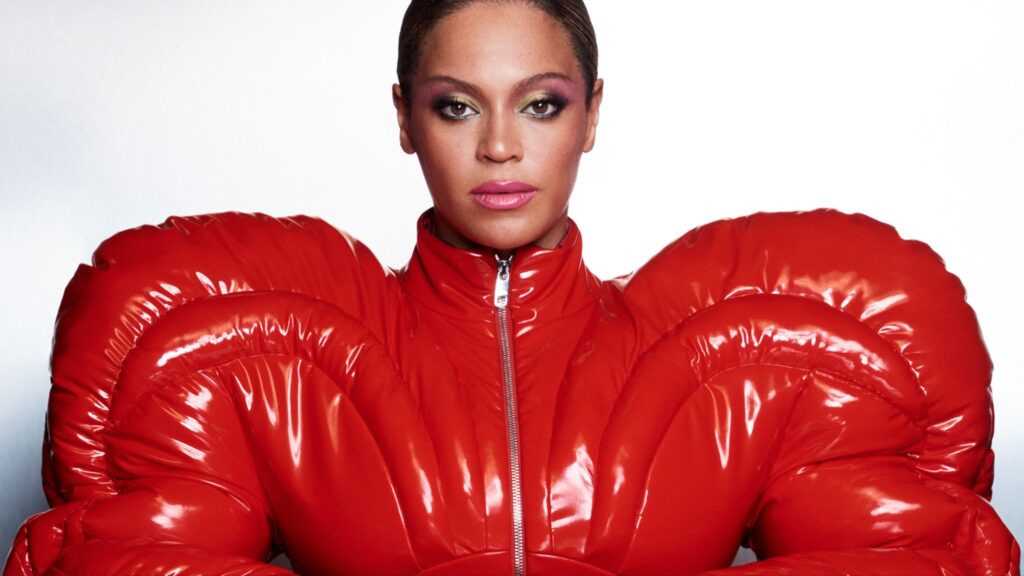
Much of the Renaissance era drew directly from the history of dance music and queer nightlife culture. The album itself celebrated the lineage of club spaces: environments where identity, fashion and sound merged into a shared language of liberation.
Within this context, latex functioned as visual amplification. Sculptural garments and reflective surfaces interacted with stage lighting, transforming Beyoncé into a kinetic object of light and movement.
What had once been coded as fetish fashion now operated on a different scale entirely.
Under stadium lights, latex became architectural.
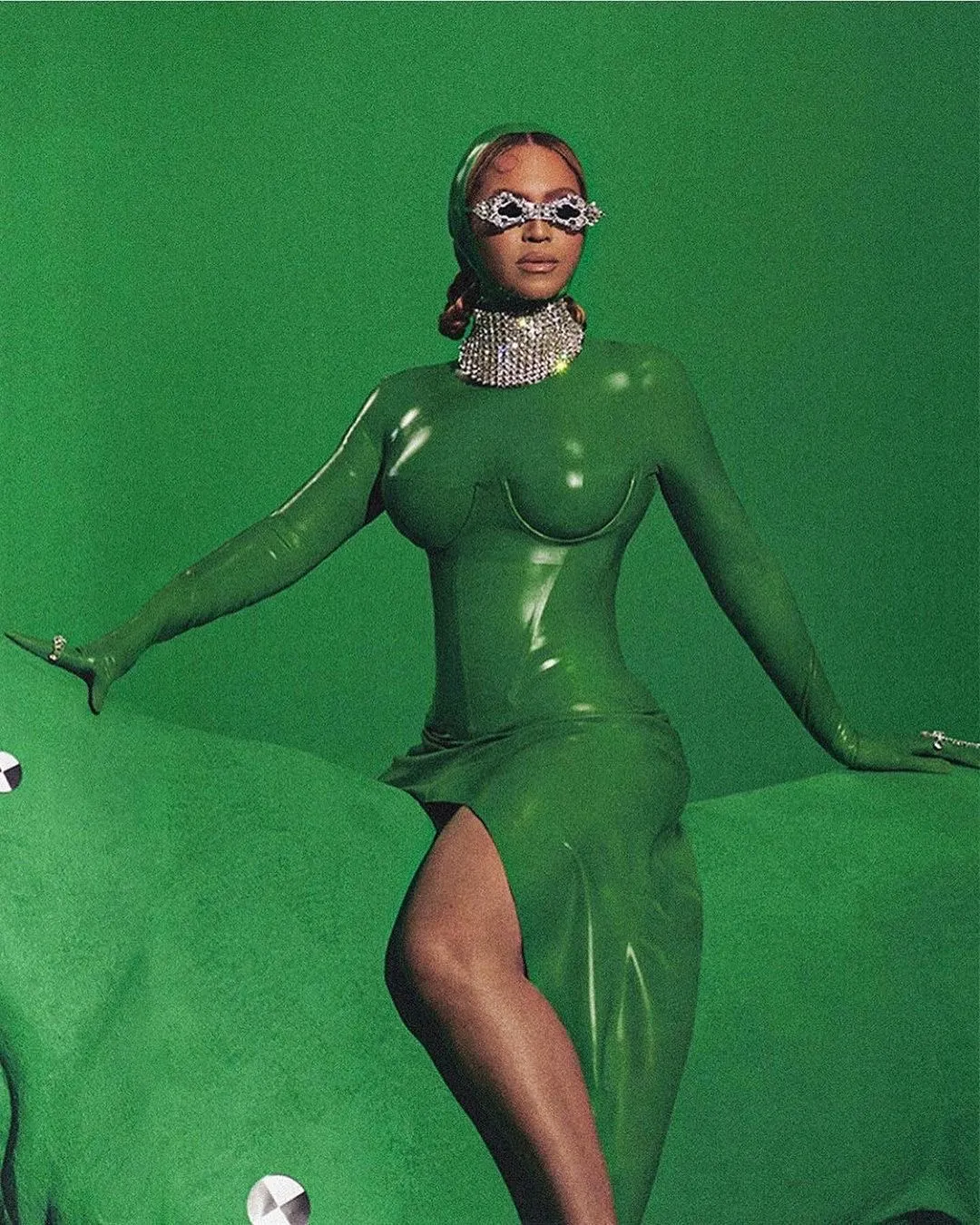
Throughout Renaissance, the performer’s body often appeared almost futuristic: wrapped in chrome, metallic fabrics and experimental silhouettes that echoed the aesthetics of high fashion and club futurism.
Designers used latex and latex-like materials not simply for provocation but for transformation. These garments reshaped the body into something monumental: reflective, exaggerated and hyper-visible.
Where earlier pop eras flirted with latex as rebellion, Renaissance embraced it as spectacle.
The performer was no longer just wearing the material.
She was embodying it.

Looking across the history of pop performance, Renaissance represents a culmination of decades of visual experimentation.
Materials once associated with underground nightlife: latex, leather, metallic surfaces – have gradually migrated from club spaces to the largest stages in the world.
In Beyoncé’s hands, these materials become symbols of celebration, visibility and power. They reflect light, movement and music back toward the audience.
The body becomes the spectacle.
Latex becomes the stage.